
1955 riots against minorities on the big screen
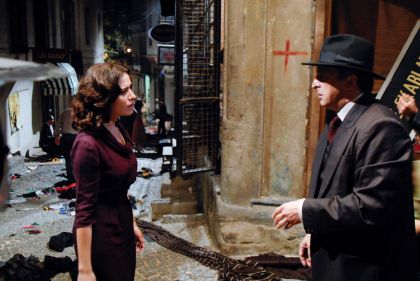
The Turkish public, at least a part of it, had to wait for 50 years to learn what really happened during the pogrom against the Christian inhabitants of Istanbul in September 1955. In 2005 Dilek Guven’s very detailed doctorate thesis on the Septembriana presented at the Bochum University in Germany was published in Turkish. Same year, photographs and documents compiled by the martial law judge retired Admiral Fahri Coker (Tsoker) who served at the court that tried the suspects was also printed and distributed. Tomris Giritlioglu’s film “The Autumn Pain” comes four years later as a cinematographic account of a love affair between a Greek girl from Istanbul and a Turkish boy who comes from a staunchly rightwing and chauvinist but at the same time rich family with a backdrop of Septemvriana. The scenario is based on a novel by Yilmaz Karakoyunlu, a former parliamentarian who has also written an earlier novel about the Wealth Tax levied on Turkey’s non-moslems in 1942. That novel was also put on film by Giritlioglu with the title “Mrs. Salkim’s Diamonds.” As “Mrs. Salkim’s Diamonds” then, “The Autumn Pain” is also hailed now by most of the commentators as an artistic attempt to recognize the injustices done to Turkey’s non-moslem minorities. “The Autumn Pain” completes Giritlioglu’s trilogy which started with “The Other Side of the Water” that again told us a love story between a Greek girl and a Turkish boy as the tragic events of exchange of populations in 1922 between Turkey and Greece unraveled. Ali Acikoz (Atcikoz), one of the commentators on “The Autumn Pain,” points out to the most likely pitfalls in film scenarios structured as a love story at times of social or political turmoil. “Since our generation has witnessed all these events, I did not find any difficulty in […]