
Alluring Aphrodisias is a minefield of ancient Roman treasures
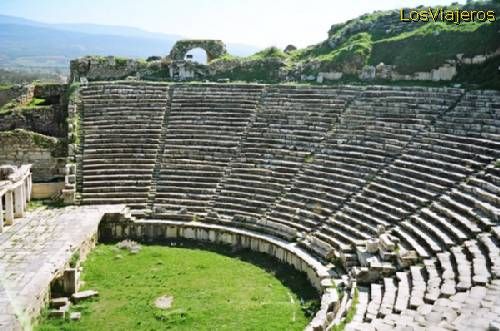
News,etc Some say that Aphrodisias, in inland Aegean Anatolia is the most enchanting site in Turkey and they may be right. Ephesus is too large and well organized to be as appealing and Troy, as charming and mythical a picture as it conjures up, has not been sufficiently unearthed. Aphrodisias falls between the two. It covers a surface area of 500 hectares within the fortification walls and contains one of Anatolia’s most awe inspiring stadiums -250 meters long and 140 meters wide with a 20,000 spectators capacity. With excavations still incomplete the site offers plenty of ruins for amateur archaeologists to reconstruct in their minds. Aphrodisias is not easy to reach, which is one reason why it has not attracted much attention from archaeologists or tourists until recently. On a plateau of 600 meters altitude, the site is 100 kilometers from the inland Aegean town of Aydin and 106 kilometers from Denizli, where Pamukkale is situated. Aphrodisias’ resurrection is an interesting story in itself; the village of Geyre named after the antique region of Caria was constructed within Aphrodisias fortification walls in the 18th century. By that time, the ancient site had long being covered by soil and forgotten, having suffered several earthquakes and raids. The inhabitants of Geyre grew crops on the ancient site built their houses with the pillars and stones that once supported Aphrodias temples and washed their clothes in conveniently shaped sarcophagi. In 1957, the villagers started digging an irrigation ditch and stumbled over more and more obstacles-things like sculptures and friezes- as they advanced. Finally, they decided to show the objects they had recovered to local museum curators. In 1959, the Turkish government moved the entire village off the site to a new location 1,5 kilometers away. It happened that the village, nestled upon a […]