
Street Music and Music Street
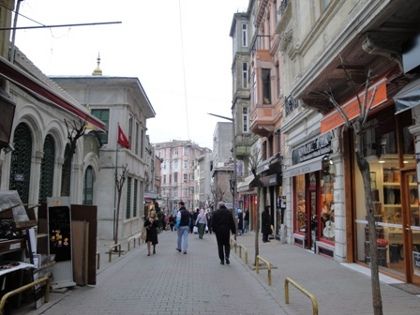
Cristina Rotaru If you’re walking the streets of the small area called Tünel in Istanbul’s Beyoglu you will find your senses overwhelmed by the strongest of smells and the most curious of sights, but, more importantly, by the number of music stores that fill the picture. It’s all about the music around the Galata Tower – and you are unlikely to leave the place without humming a tune, regardless of whether it’s “Light my Fire” or some traditional Turkish folk melody the name of which you can’t even pronounce. Be it Wednesday morning or Saturday evening, people here seem to always be out and about, working, smoking, yelling in the streets, drinking tea (cay), all of which are accompanied by some kind of sound. It is a musician’s dream, this picturesque image of Southeastern Europe, and by the looks of it, this once-upon-a-time shabby area is contributing to the district’s rejuvenation project. Life here follows its normal course, completely undisturbed by the outside world and it seems as if it was this way since the beginning of time. But this place has, as the environment suggests, a much more complex history than that.The Byzantines called it Pera, the “opposite shore,” and the Ottoman Turks used the ancient name Galata, for which two etymologies are posited: either the Italian “calata” meaning “streets of steps” or “galactos” meaning “milk”. The Venetian trading company to which it served as home, elicited serious suspicions from the Byzantines: they distrusted this area, so much so that in 1185 there was even a hostile outburst between the populations of Constantinople and that of Galata, which went on for well over 20 years. From that time on, the hatred on the “opposite shore” increased gradually and after over half a century of Latin occupation, Constantinople was restored […]