Etiket habervs

Istanbul 2010 to be launched after lots of disillusionment
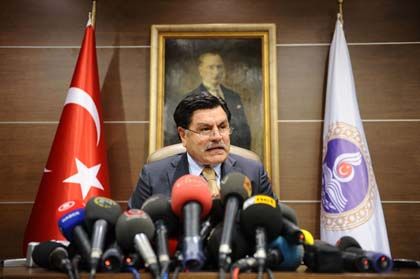
Karen Schewina “The greatest heritage we would transfer to 2010 proudly is gone forever”, states Halim Bulutoglu, member of the History Foundation of Turkey, in his resignation letter on 16th of November. He has his reasons to leave the Advisory Board (AB) of the European Capital of Culture (ECOC) Agency. One of them is the fact that “there is neither a structure nor somebody to stay behind the promises that we made enthusiastically in the beginning” of the long road for Istanbul to become one of the three cities being elected for 2010.“Together with the opening celebrations on January 16th which will take place at six different locations across Istanbul, we have prepared a large and comprehensive program in cooperation with many culture-art organizations so that Istanbul residents can share this energy,“ declared Şekip Avdagiç, the Chairman of the Executive Board of Istanbul 2010 European Capital of Culture Agency at a press conference, but many who have resigned from the board disillusioned by the preparation process disagree that the event will go without a hitch.The agency Bulutoglu says has become “bulky and functionless”, moving away from the ideas and ideals it was supposed to achieve. At the same time, Faruk Pekin from the Cultural Awareness Foundation declared his resignation from the agency, which was founded in 2007 by Prime Minister Recep Tayyip Erdoğan to coordinate the future activities and the relevant institutions in the preparation process. The agency has a coordination board composed of five ministers, an advisory board and an executive board.Recently, Bulutoğlu and Pekin were the last ones to pull out of the board in a long line of NGO representatives who resigned earlier disillusioned with the policies of ‘officials’ sitting on the board with them. In 2009, the agency has been shaken by several waves of resignations, […]

Bir yılda ‘one minute’

İsrail Dışişleri Bakan Yardımcısı Danny Ayalon’un Türkiye büyükelçisi Oğuz Çelikkol’u kendinden daha alçak koltuğa oturtmasıyla doruğa tırmanın Türkiye-İsrail gerginliğinin ayak sesleri, aslında geçtiğimiz yıl yaşanan “one mnute” olayından beri duyuluyordu.‘One minute krizi‘nin ardından bir türlü normalleşemeyen iki ülke ilişkileri arasındaki gerginliğin özellikle Ekim ayından beri tırmandığı görülüyor. Kurtlar Vadisidizisinde İsrail Gizli Servisi Mossad’ın kötü gösterilmesi gerekçesiyle patlayan son krize kadar 2009 yılı içinde iki ülke arasında yaşanan olaylar dizisi, Türkiye-İsrail arasındaki gerginliğin ne ilk ne de son olduğunu gösteriyor. 2 Şubat 2009, “Türkiye’ye silah yok”Jerusalem Postgazetesi, üst düzey bir İsrailli savunma yetkilisine dayanarak, “Savunma Bakanlığı, Türkiye’nin ileri teknoloji İsrail yapımı askeri platformları satın alma taleplerini reddetmeyi değerlendiriyor” diye yazdı. Aynı yetkili “Nasıl biz Ürdün ve Mısır’a ileri teknoloji askeri platformları satmıyorsak, Türkiye’ye de satmamaya karar verebiliriz” dedi. 28 Nisan 2009, Tatbikat engeliTürkiye ile İsrail arasında, Davos toplantıları sonrasında yaşanan kriz daha tam olarak durulmadan, ilişkilerde bu kez de “Suriye ile tatbikat krizi” çıktı. İsrail, Türkiye ile Suriye’nin yaptıkları ortak askeri tatbikata tepki gösterdi. İsrail Savunma Bakanı Ehud Barak, bu sabah yaptığı açıklamada, “Türkiye ile Suriye’nin ortak askeri tatbikat yapması, bizim açımızdan rahatsız edici bir gelişme” diye konuştu. 15 Ekim 2009, Birinci dizi kriziTRT‘nin yeni dizisi “Ayrılık” İsrail’de büyük tepki topladı. Dizinin dün ilk bölümünün yayınlanmasının ardından, akşam saatlerinde Yedioth Ahranot gazetesinin İbranice haber sitesi Ynet, diziyle ilgili geniş bir yazı yayımlayıp İsrail’in dizinin yayımlanmasından doğan “travma”yı yaşadığını belirtti. Son olarak Türkiye Büyükelçiliği Geçici Maslahatgüzarı, İsrail Dışişleri’ne çağrıldı. TRT’de yayımlanan “Ayrılık” adlı dizinin İsrail’de tepkiye yol açmasından sonra, Tel Aviv’deki Türkiye Büyükelçiliği Geçici Maslahatgüzarı Ceylan Özen Dışişleri Bakanlığı’na çağrıldı. 18 Ekim 2009, “Dürüst olmayan arabulucu”İsrail Başbakanı Benjamin Netanyahu, Türkiye’nin ülkesi ile Suriye arasında yeniden aracılık yapmasını istemiyor. Netanyahu, Kudüs’te görüştüğü İspanya Başbakanı Jose Luis Rodriguez Zapatero ve beraberindeki heyete “Türkiye dürüst bir arabulucu olamaz” dedi. 22 Ekim 2009, Acil büyükelçiTürkiye ve […]

Television serial flares up confrontation with Israel

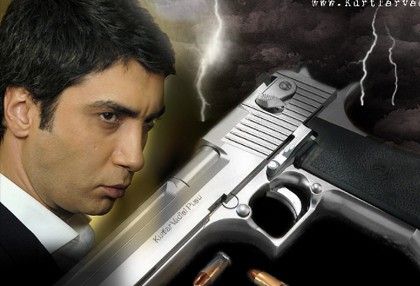
News, Etc. It was again a television serial aired almost a year after the Turkish Prime Minister Tayyip Erdogan’s televised row with the Israeli President Shimon Peres in Davos that poured more oil on the fire intensifying the “war of words” between Ankara and Jerusalem. This time the setting of the scene in the serial “Valley of Wolves” was a safe house used by the Israeli Embassy where a Turkish kid kidnapped by the Israeli agents was being kept. Polat Alemdar, the pistol packing hero of the serial raids the house, pumps few bullets into the head of the Israeli agent and the blood splashes on the wall where the spectators see a Star of David, Israel’s national emblem, stained in red. Danny Ayalon, the Israeli deputy foreign minister, summoned the Turkish ambassador Oguz Celikkol to tell him that the serial consists of anti-Semitism in a “new package” and such material was not fit to be aired even in an enemy country let alone in Turkey which is a strategic ally of Israel. He said the episode presented the Israelis and Jews as “baby snatchers,” and threatened not only the relations between the two countries but also the lives of Jewish minority members living in Turkey. The Turkish media reports criticized Ayalon’s behavior during the meeting claiming that he refused to shake hands with the Turkish ambassador and made him sit on a lower seat than his own. At this stage Prime Minister Erdogan joined in and accused Israel of violating United Nations resolutions by bombing Gazza. “Does the Israeli government support peace or not? The other day they bombed Gazza again. There was no reason for it. They are using weapons of mass destruction like phosphorus bombs. They want to say we do whatever we want, nobody can stop […]

Benim Adım Orman

Lara Özlen Dört buçuk yıllık özlemin ardından “Hoşçakal”la kapattığı ruh muhasebesinin kapağını “Merhaba”yla açıyor Şebnem Ferah. Özletmişti kendini, bekleniyordu heyecanla, herhalde herkes hemfikir bu konuda. 2007’de piyasaya sürülen “rock senfonisi” sayılmazsa yıllardır biriken bir “stüdyo albümüne özlem” söz konusu. Daha pek taze olan Benim Adım Orman albümünün kapağını, beklentilerimi büyüttükçe büyüterek açıyorum. Sonuç: Az biraz özlemin dindirilmesi, epeyce hayal kırıklığı. Birçok yönüyle klasik bir Şebnem Ferah albümü duruyordu karşımda. Üslup, devrik cümleler, gizli anlamlar, müziğin tınlayışı, isterik feryatlar… Her şey kemikleşmiş “Şebo” tarzına uygundu. Yalnızca sözler pek beklenen doyumu veremiyordu. Albümün açılış parçasıyla “Merhaba” derken enerjik ve dolu dolu geldiğinin sinyallerini verir gibi Ferah. Olması istenilenlerin kolayca olabildiği, özgürlüğün sınırlarının olmadığı sihirli bir dünyaya davet ediyor dinleyiciyi. İkinci ve albümle aynı ismi taşıyan “Benim Adım Orman”la olgunluğunun doruklarında, toprak ananın kollarında geziniyor sanatçı. “Yalnız”da sokakta akordeon çalanın yalnızlığı, hayatın nihai gerçekleri işliyor içimize. Herkesin birbirine benzeyen ama birbirinden fersah fersah uzak görünen binlerce hikâyesinin olduğunu hatırlıyoruz. Fakat bir kadının (hem de feminizme yakın duran bir bestekarın) “kahpe dünya” tabirini kullanmasını pek de anlayabildiğimi söyleyemeyeceğim. “İstiklal Caddesi Kadar”la aşk feryatlarına tanıklık ediyoruz Ferah’ın. Geçmişe takılıp kalmak, onu bıkıp usanmadan tekrar tekrar yaşamanın takıntılı döngüsü hammaddeleri şarkının. Albümde remiksiyle birlikte iki kez tekrarlanan “Eski”ye geldiğimizde sıradan güzel güne, ağaç dinginliğine erişmenin özlemini haykırıyor Şebo, kayıpların ağırlığı heyula gibi çörekleniyor bünyelere. Elden kaçırılan, önümüzden geçip giden fırsatlar; artık yıpranan “Mahalle”yle aynayı biraz da kendine döndürüyor. “Ateşe Yakın” uçmaktan hiç utanmadan vazgeçmeyen Ferah, babasına duyduğu özlemi en açıktan minik minik işliyor ruhumuza. Albümün bence gözyaşı dökmeye en elverişli şarkısı da bu. Mutluluktan sürülmüş yarısıyla konuşuyor, asfalta saçılan hayatını toparlıyor, “Serapmış” derken. İnsanlığımızı sorgulatıyor ve umudunu yavaştan yitirmeye başladığını hissettiriyor hafiften “İnsanlık”la. Yarım kalan aşklarının yasını tutuyor, tahlilini yapıyor “Bazı Aşklar”la Metin Türkcan’ın gitar solosu eşliğinde. “En güzel şarkım henüz yazmamış olduğumdur” diyor, çocuksu saflığımızdaki […]

Basında ‘love and hate’: Ertuğrul Özkök

HaberVs Dile kolay, 20 yıl… Bir gazetenin üstelik de yalnız Doğan Grubu’nun değil neredeyse Türkiye basınının “amiral gemisi” sayılan Hürriyet’in yayın yönetmenliğinden ayrıldığını açıklayan Ertuğrul Özkök’ün ardından beklendiği gibi bir fırtına koptu. Hürriyet’in daha Simavi ailesi’nin olduğu dönemde Çetin Emeç’in bir suikaste kurban gitmesini ardından “daha ılımlı” bir isim olarak gazetenin başına getirilen Özkök şimdi de biraz “radikal” bulunduğu için, gazete yönetimine veda etmek zorunda bırakıldı. Hürriyet’in Aydın Doğan’a geçmesinin ardından “gitti gececek” denilen Özkök, şu veya bu nedenle eleştirilse de gazetenin başında kalmayı sürdürdü. Özkök’ün istifası kimine göre hayırlı, kimine göre bir “geri adım”. Ama kim ne derse desin dün itibariyle Türkiye basınında bir devir kapandı ve yeni bir dönem başladı. Bu “devir değişikliği”ni gazete ve yazarların nasıl gördüğünü, en azından tarihe bir not düşmek için derledik. Vatan: “Hürriyet’te görev değişikliği” Haberi ön sayfadan duyuran Vatan, Ertuğrul Özkök’ün yerine Enis Berberoğlu getirildiğini duyurdu. Vatanyazarlarından Reha Muhtar, “Ertuğrul Özkök için söylediklerim ve söylemediklerim” başlıklı yazısında “Hürriyet gibi Türkiye’nin devlet gibi gazetesini 20 yıl genel yayın yönetmenliği koltuğunda oturarak yönetmek bir gazetecinin yaşamında çocuklarına bırakabileceği çok değerli bir mirastır” yorumunda bulundu. Muhtar, Özkök’e söylemediklerini ise kısaca şöyle özetledi: “Genel yayın yönetmenliği gibi görevlerde insanların önemli bir kısmı gücünüzden dolayı size saygılı davranırlar… Mesele hayata, “genel yayın yönetmeni olarak gelmediği gerçeğini” bilmekten geçer. Eğer bunun bilincindeyseniz, ‘Hayat boyu Tanrı tarafından seçilmiş bir genel yayın yönetmeni’ olduğunuza inanmıyorsanız, zaman içinde ‘sizi sadece kendi kişilik özelliklerinden dolayı sevecek insanlarla’ beraber olursunuz.. En kutsal hazine, sizi sadece kişilik özelliklerinizle seven insanlarla geçireceğiniz keyifli saatlerdir. Çünkü oradaki alma-verme ilişkisi sanal değil hakikidir… Genel yayın yönetmeni olunmadığı durumlarda hayat hakikidir. Hakikatlere hoşgeldin Ertuğrul Özkök…” Akşam: “20 yıllık Özkök dönemi kapandı” Ön sayfadan duyurulan haberde Özkök’ün Hürriyet çalışanlarına yaptığı veda konuşmasına değinildi. 18 Aralık’ta CNNTürk’te yayımlanan Medya Mahallesi adlı programda Ayşenur Arslan ile yaptığı söyleşiden bahsedildi. Ahmet Hakan, […]

Patriarch Bartholomeos criticized for feeling “crucified”

Niyazi Dalyancı “Yes, I do,” replied His All Holiness Bartholomeos, the Greek Orthodox Patriarch of Fener, to the U.S. television network CBS’s Bob Simon who asked him, “So do you feel crucified?” during an interview for the network’s “60 Minutes” news program with high ratings, drawing a harsh reaction from Ahmet Davutoglu, Turkey’s Foreign Minister. During the interview Bartholomeos complained about the treatment his dwindling community in Turkey was receiving at the hands of the state and said that the Greek Orthodox citizens of the country were considered 2nd class by the authorities. Despite all his efforts and international pressure, the problems of the Greek Orthodox community in Turkey like reopening of the Halki Seminary to educate priests, remain unresolved, he said. The interview was conducted in Turkey in April by Bob Simon and aired on Dec.21. by CBS. When the Turkish media picked up Bartholomeos’ comments, the resulting reaction was mixed. But the sharpest retort came from Davutoglu. “In our historical tradition there has never been a crucifixion. The history of the Turkish nation is built upon religious tolerance,” Mr. Davutoglu claimed. “I don’t find this comparison compatible with the mature personality of the Patriarch,” said Mr. Davutoglu who found “crucifixion” an “extremely unfortunate comment,” which he hoped that it was “a slip of the tongue” on behalf of the Patriarch. “If he has complaints we have appropriate authorities to which he could convey his complaints. We shall work on them and see what can be done. We cannot accept such comparisons that we do not deserve,” said Davutoglu. “Turkish Republic does not evaluate its citizens according to their religious identity,” he added. The regulations under which the Patriarchate functions were sealed in the Treaty of Lausanne in 1923 and they stipulate that all the patriarchs should have Turkish […]

“You Europeans are different”

Johanna Holm Never have I felt as European as I have during my stay in Turkey. I came to Istanbul in September 2009 and I have faced attitudes and comments that have surprised me and which I did not always expect to hear. Some of them made me laugh, some made me almost speechless and the rest made me to give a speech about how I see the issue. I am from Finland and I am used to consider myself as Finnish. I have noticed that there is a difference in the conception of nationality and nationalistic ethos between Finland and Turkey. In Finland the issue of nationality is not extremely strong. Furthermore, for me personally the idea of nationality is that it does not give you a label that marks you thoroughly. It can be a part of you, but it is also possible to step outside its boundaries. For some people nationality seems to be the primary subject that defines you not only from inside but from outside, too. People have asked me many times: are all the people blond in Finland? I have brown hair. Do I really need to answer this question? I know, I also come under the category that people describe as “European.” However, if defining oneself as a part of something, in this case as European, requires things such as identification, sharing the values and norms, and some kind of common history. I do not feel particularly European. More likely it makes me ask: what is being European, what do I really share with numerous individuals inside the geographical borders of Europe? In what way am I part of it, with or without my own will? What always strikes me is the notion that Turkish people I have talked to, see Europe as […]

European students find a different ambiance at Sureyya Opera

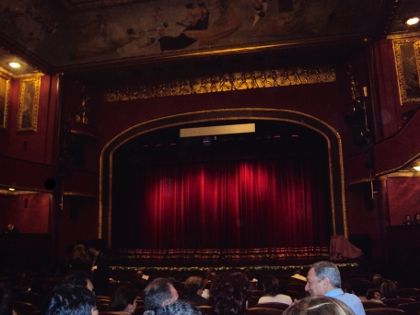
Aneka Rusak “You cannot feel here the high class atmosphere that you feel at opera houses elsewhere. People don’t dress up with in their best anymore. The first thing that surprised me personally, when I visited this opera was people wearing sports shoes,” says Cesar Sevillano Gallach, 22, an exchange student from Spain who often attends performances at the Sureyya Opera House in Kadikoy. In most of the European cities opera and ballet performances are considered to be a part of elite culture. So, one should not be surprised at the comments coming from a young Spaniard. The Sureyya Opera House in Kadikoy was originally established to function precisely for this purpose. However, after being used mainly as a movie theater for more than 80 years, a restoration project recently has returned the ornate, art-nouveau building to its original function. ”The building should not be approached under the ubiquitous and vague concept of ‘cultural center’, which would detract from its value. The inhabitants of Kadiköy and surrounding districts are undoubtedly in need of a concert and opera house, and this building is meant to meet this specific need. The restoration project reveals the original architectural features of the building and transforms it into the Süreyya Pasha Concert and Opera House in accordance with its original purpose,” declares the website that informs us about the restoration project and the history of the building. However, as we understand from the comments of Gallach, how Turks perceive opera does not coincide with the perception of the Europeans. In European history, originally the opera house was the place where people with relatively high economic power used to go, dressing up in elegant suits and dresses and showing their new acquisitions, i.e. jewels, furs, etc. It was an almost inaccessible place for the middle class. […]

“We are not afraid of HIV but prejudices”

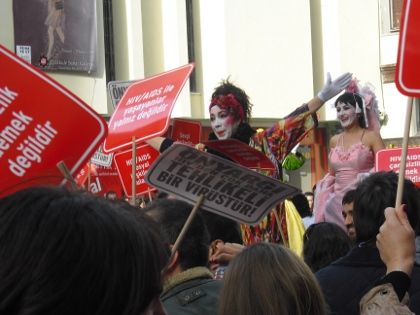
Kristin Ofer “We are not afraid of HIV but prejudices,” was the main slogan used during the events in Istanbul marking the World AIDS Day. The events provided an opportunity to change the main medical topic that is the swine flu that everybody has been talking about for several months. The flu, or more scientifically, the H1N1 virus, is dangerous bur curable. But HIV is not curable but fortunately unlike the swine-flu we can control the spreading of HIV. “HIV does not mean helplessness,” was another slogan of the World Aids Day in Turkey. 1st of December was designated as the World AIDS day by the World Health Organization (WHO) in 1988 to draw attention to the disease. For the last 21 years activists and experts all over the world are tackling with the medical but also the social problems presented by the disease. Since 1985 about 2,500 people in Turkey had been officially registered as infected with HIV. In contrast to about 75 Million people living in Turkey the number of HIV infected persons does not seem impressive but the estimated number of unreported cases is expected to be rather high. According to the WHO’s country profile on Turkey HIV-tests are mostly limited to the urban centres. Actually half of them are registered within the boundaries of the province of Istanbul. Istanbul was the centre of the activities of the World Aids Day in Turkey. The events to mark the World AIDFS Day in Turkey were organized by the “Pozitif Yaşam Derneği”, the Turkish branch of “Positive Life Association”, a NGO which has been founded in order to build a network among people living with HIV/AIDS. They want to ensure that infected people have better access to treatment, to improve their living standards, to strengthen them and their relatives […]

Discovering recycling

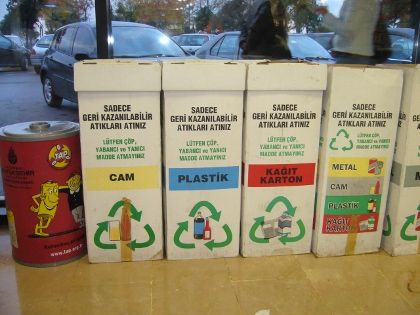
Johanna Holm Istanbul produces about 10,000 tons of solid waste every day. A part of this is being recycled and re-used again. However, a big part is still not recycled which causes damages to the nature: in 2008 the waste amount was 3,653,333 tons/year and only 938 830 kilos were recycled. According to communication and education specialist Berkan Tunçludemir from ÇEVKO, citizens of Istanbul have the crucial role of making recycling work efficiently. In 2006 a person in Istanbul produced 1,28 kilos of waste every day. 40% of this waste consists of packaging materials. Packaging waste is also the part of garbage that could be easily recycled: glass, plastic, metal, paper/cardboard and composite. At the moment, only part of packaging waste is being recycled and the rest goes to dumping places. A non-profit recovery organization registered with the Turkey’s Ministry of Environment and Forestry, ÇEVKO (Environmental Protection and Packaging Waste Recovery and Recycling Trust) was set up on the initiative of Turkey’s 14 leading industrial companies in 1991. The organization cooperates with communities and industry at different levels, organizing recycling and raising awareness on the issue. Berkan Tunçludemir tells that in 2005 the Ministry of Environment and Forestry issued “Regulation on the control of packaging waste”. “These regulations say that local administrators have to make a system for recycling. The problem is that it is not wide spread and it is new for Turkish people.” That is, it is not working as well as it could work. In waste management the responsibility to recycle is divided between several actors who all have their responsibilities listed in the regulations. The actors are the ministry, provincial directorates of the ministry, municipalities, packaging producers, marketers, authorized institutions and selling points. Tunçludemir tells how the system works: “Municipalities plan waste collection system. They make […]

Constitutional Court shuts down DTP

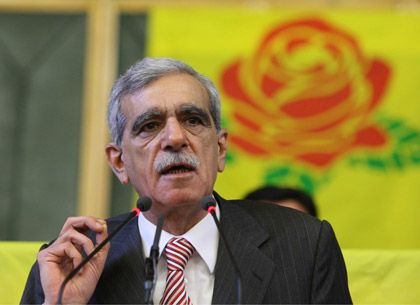
Niyazi Dalyancı State of affairs in Turkey, already rife with political and social tensions, took yet another precarious turn with the eleven members of the Constitutional Court voting unanimously to close down the Kurdish Democratic Society Party (DTP) on grounds that it has become a focal point of activities aimed at undermining the national integrity of the country. According to the ruling Ahmet Turk, one of the two co-chairpersons of DTP and Aysel Tugluk, member of the parliament lost their seats in the nation’s legislative assembly bringing down the number of deputies the party had down to 19. The Constitutional Court ruling also stipulates that all property, including office furniture owned by DTP should be transferred to the national treasury. Turk announced a day after the ruling that his party will withdraw from the parliament and “continue their struggle for democracy outside.” Describing the ruling as “political not legal” Turk said his party never proposed “violence” as a method for solving the Kurdish question and accused the ruling Justice and Development Party (AKP) for falling silent when the Constitutional Court took up the case for closing down DTP. “They were very critical of the Constitutional Court when their closure case was being processed. They are democrats for themselves only,” said Turk. He was referring to the case last year when the Constitutional Court took up a similar case to close down AKP on grounds that the party was undermining the secular principles of the Turkish Republic. Although the court ruling in July 2008 said AKP has become the center of anti-secular activities, it stopped short of closing the ruling party and handed down a hefty fine. Although the detailed ruling of the Constitutional Court has not been made public yet, Chief Justice Hasim Kilic referred to DTP’s “ties with the […]

Kapatılan yedinci Kürt partisi DTP oldu

HaberVs Anayasa Mahkemesi, Demokratik Toplum Partisi’ni (DTP), kapatılmasına karar verdi. DTP’nin “terör faaliyetlerin odağı haline geldiği” iddiasıyla, “ teröre bulaşmış bir partiye ifade özgürlüğü hakkı tanınamayağına” hükmeden mahkeme Abdülkadir Fırat, Ahmet Ay, Ahmet Türk, Orhan Miroğlu, Selim Sadak, Aydın Budak, Aysel Tuğluk ve Leyla Zana’nın da aralarında bulunduğu çok sayıda üye ve yöneticisine de siyaset yasağı getirdi. Mahkeme DTP eşbaşkanı Ahmet Türk ve DTP Diyarbakır milletvekili Aysel Tuğluk’un milletvekilliklerinin de düşürülmesine karar verdi. Anayasa Mahkemesi’nin aldığı bu kararla DTP 14 Temmuz 1993’ten Halkın Emek Partisi’yle başlayan süreçte kapatılan 7. Kürt partisi oldu. Kılıç açıkladı Anayasa Mahkemesi Başkanı Haşim Kılıç bugün (11 Aralık 2009) akşam saatlerinde yaptığı açıklamada, DTP’nin ”Devletin ülkesi ve milletiyle bölünmez bütünlüğü aleyhine eylemlerin odağı haline geldiğinin anlaşıldığından Siyasi Partlier Kanunu’nun ilgili maddesi gereğince oybirliğiyle kapatılmasına karar verilmiştir” dedi. Partinin tüm mal varlığına el konularak Hazine’ye iade edileceğini de belirten Kılıç, “Yapılacak eleştirileri şimdiden görebiliyorum. Verilecek kararın zamanlaması için verilen tarihin amaçlı olduğu söylendi. Bu yorumlar çok acımasız. Biz 2 yıldır bu davayı görüşüyoruz..Eksiklliklerimiz vardı ve bu eksiklikler raportörümüz aracılığıyla giderilmeye çalışıldı ve bu zamana denk geldi. Bir siyasi partinin terörü ve şiddeti meşrulaştırmaya çalışması uygun değildir. Anayasa Mahkemesi terör ve şiddeti barışçıl çabalardan ayrı tutarak kararını vermiştir” dedi. DTP’yle ilgili verilen kapatma kararı yarın (12 Aralık) Resmi Gazete’de yayınlanacak. Yargıtay Cumhuriyet Başsavcılığı kararı DTP’te tevdi edecek ve partinin tüzel kişiliği sona erecek, malvarlığı hazineye geçecek. Haklarında milletvekilliğinin düşürülmesi ve siyaset yapmaları yasaklama kararı verilenlerin siyasi yasakları da başlayacak. “Parti kapatmakla sorun çözülemez” Siyaset yasağı getirilen Ahmet Türk, Anayasa Mahkemesi’nin kararının açıklanmasından sonra yaptığı açıklamada dana önceki sözlerinin arkasında durduklarını belirterek parti kapatma kararlarıyla sorunun çözülemeyeceğini söyledi. Sancılı bir süreç yaşandığını belirten Türk, “Elbette demokratik siyasette parti kapatmak, bir umutsuzluğu derinleştirir. Ama biz bütün buna rağmen Türkiye’de barışın yakalacağına inanıyoruz. Bu sancılı sürecin uzamaması, herkesin yeniden düşünmesi ve […]

Marmaray project to change the image of Istanbul

Manon Loisel “The Marmaray is going to change the face of Istanbul entirely,” says Nora Seni, director of the IFEA, French Institute of Anatolian Research. “Dazzling”, “providing freer movement”, “being better connected” and “revitalizing” are her keywords about the Marmaray tunnel project. The IFEA is involved in social studies and historical research. The Urban Observatory of Istanbul (OUI), a study group affiliated with IFEA, is focusing on urbanization, historical heritage and circulation of inhabitants in Istanbul. Nora Seni is conducting research in history and in urban problems. She used to teach at the Université Paris VIII before she took up her post at IFEA. On the water’s surface the small passenger ferries called vapurs are shuttling back and forth between the Asian and European parts of Istanbul. But, under the water, a colossal project is near completion. The 2.5-billion Euro project is partly financed by Japanese and German investment banks. The Ottoman dream of linking the two parts of Istanbul underwater, first put forward by Sultan Abdul Mecit 150 years ago, is being realized. The first step for the realization of this idea was taken in 1987 with the drafting of a comprehensive feasibility report. The Marmaray Rail Tube Tunnel is going to connect Halkali, on the European side with Gebze in Asia by 76 kilometers of two-track commuter rail, with 1.4 kilometers running deep into the Bosporus. Construction work started in October 2004 and laying down parts of the steel tube on the sea bed from Asia to Europe began in 2008. But digging the ground in a city known to be inhabited by human beings sincePre-historical times inevitably revealed lot of archaeological finds both on the European and Asian parts of the city. That caused work on Marmararay to fall behind schedule. Istanbul archaeologists have uncovered a 4th-Century […]

Life and love in Pera Museum

Piotr Zareba Pera Museum used to attract attention with its exhibitions of significant artists. This time we can discover Marc Chagall’s Life and Love, collection of prints, drawings and paintings.The exhibition is an evidence of artist’s stormy life. His Jewish descent was the reason of his numerous migrations. “When we escape from Russia we first went to Istanbul. After we spent a few years there, we went to Paris and Rome,” wrote Chagall. “I know Constantinople… I mean, I know Istanbul very well. We lived there for two years on Büyükada, in a wooden house. We could see the other islands from there.”The exhibition contains illustrations of his autobiography My life written in the early twenties in Moscow. They are Chagall’s exploration into his Jewish-Russian origins, happy childhood in beloved family town Vitebsk and artistic experiences in Paris. His drypoint and gouache self portraits show his nature, his weaknesses, concerns and the way he perceived himself. We can look into his multi-faceted personality shaped by places he was forced to live in.Apart from reflection of Chagall’s life, the exhibition gives the visitor the chance of seeing his illustrations for The Fables by La Fontaine, Dead Souls by Nikolai Gogol and books written by Bella Chagall, the artist’s first wife. We can also witness his extraordinary illustrations he made for the Bible. Thanks to his Slavic spirit, Jewish tradition and his deforming style of painting, they surprisingly differ from the common, traditional way of depicting biblical scenes. It is very hard to categorize Chagall as an artist. His artworks range between Fauvism, Cubism, Symbolism and even Surrealism. Moreover, the artist used to add elements of Eastern European Jewish folk culture, which made him an independent and outstanding artist.The Chagall exhibition at the Pera Museum is the latest in a series of […]

Spreading hate through media

Aslı TUNÇ American rock band, Plain White T’s song, “hate is a strong word” could have easily been the soundtrack of the hate speech panel held a few days ago. Although the lyrics are about a nasty break-up, a good song can help to ease the sinking feeling caused by talking, listening to and writing so much about hate. The panel which was about hate speech on the mainstream media and on the Internet covered all aspects of discriminatory, racist, homophobic and xenophobic discourses with a lot of examples and the panelists had a chance to have a good discussion with the listeners after an exhausting 3-hour long paper presentations. If you had a bit of experience with mostly boring and pretentious atmosphere of academic conferences, you would understand what a treat it was for us as participants to have such a vibrant Q&A session. Let me give you a few highlights about the themes we have discussed.Our society has been suffering from a deep polarization for the last three decades. However, the level of intolerance has dramatically increased after drastic demographic shifts caused by the forcible relocation of Kurdish villagers en masse, social and cultural tensions among ethnic groups, being divided in political and ideological camps. We came to such a point where we have no tolerance to people other than nationalist heterosexual male Turks with Sunni Islamic belief.Undoubtedly media play a significant role in cultivating hate in the Turkish society presenting as news and entertainment. Rising nationalism, prejudices and anti-Semitism lay the groundwork for the spread of hate messages through media. In the mainstream print media, the newspapers, Yeniçağ, Vakit and Yenişafak use a great deal of discriminatory language in their news coverage. It is very common that the mainstream dailies publish news items that protect the suspect […]

Is the spirit of ’68 back in Germany?

Kristin Ofer The spirit of 1968 is back in German universities. After 41 rather quiet years of studying the grandchildren of the former revolutionaries raised their voices again. They are protesting reforms to the country’s university system. But according to Germany’s education minister Anette Schavan the students’ prospects of success are rather low. She stated that the changes will go ahead as planned. Tens of thousands of German students have been demonstrating on the streets of major university towns like Berlin, Leipzig, Hamburg and they are carrying out sit-ins in 27 universities in 23 cities reminiscent of the student upheavals of 1968. The current generation of students was often considered as eager memorizers who are ambitious for their own careers or hedonistic party-animals without any interest in social or political activism. But in the last years German students had to cope with a lot of significant changes. Until 2005 universities in Germany were free. But the so-called university reform imposed tuition fees that range from100 to 500 euros per semester. Actually, most universities charge 500 euros. Compared to many other countries, especially in the Anglo-Saxon world, 500 euros per semester do not seem much. But the German students are questioning the whole principle of paying for education. There are indeed students who are not financially supported by their parents and have trouble to get the required sum of money together. Tobi, a 24-year-old student of dramaturgy is one of them: “I have to work all my free time to afford my living costs and since the adoption of the tuition fee I have to earn 1,000 euros extra per year. It makes me so angry. I can’t even join the demonstrations because I have to work,” he says. Students whose parents do not pay for their studies sometimes spend more […]

Internet censorship threatens Turkey’s reputation

Karen Schewina Instead of looking at their growing magic beans and happy chicken, Farmville users had to read the following message, when they wanted to enter their account on the morning of October 3rd: “After technical analysis and legal evaluation based on the catalog crimes of the Law no 5651, Administrative measure has been taken for this website (zynga.com) according to decision no 421.02.02.2009-272446 dated 02/10/2009 of ‘Telekomünikasyon İletişim Başkanlığı’ (Telecommunications Directorate) TIB.” As the company, which has developed Farmville, YoVille, Vampires, Mafia Wars, as well as a poker application for facebook, was accused of promoting illegal gambling, all of its websites were blocked by the Telecommunications Directorate in an attempt to protect the Turkish citizens. In this case it was not a court issued decision, but an administrative one, so it was not possible to get any statement from the people responsible during the weekend. The decision was highly criticized and caused uproar on the facebook itself, until the site was available again on Sunday night. This example seems to be typical for the strategy of the Telecommunications Directorate dealing with critical content published online: if there is one suspicion being expressed, their reaction is to block the main page as well as all the subdomains, as it happened to WordPress and Google Groups, blogspot and blogger. Not accessible are as well Youporn, The Pirate Bay, Megaupload, Deezer, Virb, Dailymotion, Tagged, Netlog, Slide, CareerBuilder and Alibaba – a complete list of the websites can be found under www.engelliweb.com. “Reporters without borders” states that all in all 1,309 websites have been rendered inaccessible by the Telecommunications Directorate since November 2007, only 270 of them by court order the rest by administrative decision. All of the websites have been blocked according to the Law 5651 on “the organization of online publications […]

Direct Democracy passes through Santral Istanbul

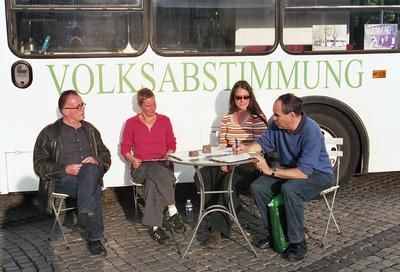
Annika Sehn “The party system is old-fashioned, instead of it there must be an efficient way to voice the questions of individuals,” says Werner Kuppers, the person behind the wheel of the “Omnibus for direct democracy in Germany” that made a stopover at Bilgi’s Santral campus. Johannes Stüttgen, a close friend of the late German artist Joseph Beuys, and an artist himself supports the activists in the bus with ideas, speeches and discussions. “We are driving around with an idea. We are campaigning for the realization of direct democracy on all levels,” explains Stüttgen. The “Omnibus for Direct Democracy in Germany,” as it is officially called, was on a tour of Eastern Europe including Turkey. “Democracy in Motion Tour,” this is how the passengers of the bus call their trip. The main event on the campus was a workshop with the students taking the course called “City and Art.” Following the workshop there was a free discussion with the people on Democracy in Motion Tour. “They were very interested and they were well prepared and had their own thoughts and arguments concerning direct democracy,” Stüttgen said afterwards. To vote just to elect representatives in the legislative assembly is not sufficient for a full democratic system, citizens should be provided with the means to voice their say about concrete issues concerning law and politics, Stüttgen explains. This could be done through popular referendums. Those referendums are already possible in some of the German states. Before a referendum takes place, people have to take initiative and demand that a chance given to them to express their will. A popular referendum is then held on the basis of collection of certain number of signatures and decisions taken in the Bundestag, namely the German Partliament. This procedure aims at direct access to politics for […]

Telephone tapping in Turkey; a measure to intimidate the judiciary?

Niyazi Dalyanci “In fact, our country is under the sway of fear to a large extent. Since its foundation, including the periods when it was run by the military, it did not witness a period of such fear. People coming to visit me are asking, ‘Is this place bugged?’” Suleyman Demirel who has left his mark in Turkish politics for more than 40 years serving both as president and prime minister said addressing a meeting of businessmen in Antalya, last week. The issue was tapping of telephones and other electronic communications between the citizens of Turkey. The problem reached scandal proportions with revelations that judges, prosecutors and even Turkey’s Supreme Court was being bugged. It all began in July 2005 when the Justice and Development Party (AKP) of Prime Minister Tayyip Erdogan passed amendments to the laws governing the functioning of the police, intelligence services and the gendarmerie allowing them to tap telephone conversations without a court order. The same amendment also set up a unit called Telecommunications Directorate (TIB) that was given the task of overseeing the wire tapping both in telephone and internet connections. Since then, telephone conversations and internet mails intercepted by the authorities have been added to the political arsenal of the struggle between the government and the opposition in Turkey. However, the revelations last week that a number of judges and prosecutors, including those serving on Turkey’s Supreme Court have also fallen victim to official eavesdropping led the judicial circles ask the question whether Turkey is heading towards an atmosphere of fear even among the high judges so that they are put under pressure preventing them from functioning properly. Since the law was passed, media organs supporting the Erdogan government regularly printed the contents of telephone conversations leaked to them by unknown sources, between defendants […]

When Journalists Get Too Cozy with the Drug Industry

Aslı TUNÇ In the midst of the swine flu epidemic caused by H1N1 influenza virus, Novartis, a Swiss-based pharmaceutical company, invited a coterie of Turkish journalists to South Africa. The journalists from the dailies, Hürriyet, Radikal and Zaman enjoyed the “hospitality” of the drug company for three days in November. As ordinary readers we learned afterwards that Novartis had briefed them about the company’s “medical breakthroughs” in vaccination of malaria and tried to promote its products, activities and services in Africa. During the journalists’ trip to South Africa, not a single reporter or columnist asked a question on the company’s vaccination policies on swine flu or even mentioned the major pandemic hitting the world and Turkey. The Turkish journalists only indicated in their newspapers that they learned a lot about Novartis’s successes around the world and they got very impressed by the company’s activities. When asked on several TV channels, they declined to answer the question about who paid the expenses of the trip. This gave me a strong impression that this had been an all-expenses-paid trip. Also it made me wonder how many of the journalists in this country would have the courage and integrity to say no to those trips in the future.It is not surprising that pharmaceutical companies work really hard to get their message out to the public and physicians through advertisements. However, there are also well-known ethical guidelines on journalistic integrity and independence when it comes to expenses-paid trips unless they are the only way to cover a significant event. For instance, in BBC editorial guidelines, it indicates that journalists should avoid conflicts of interest, real or perceived, remain free of associations and activities that may compromise integrity or damage credibility and refuse gifts, favors, fees, free travel and special treatment, and shun secondary employment, […]