Etiket habervs

Street art comes to Istanbul, in a gallery…

Francisco Castanon Fernandez “Street art is any art developed in public spaces — that is, “in the streets” — though the term usually refers to art of an illicit nature, as opposed to government sponsored initiatives. The term can include traditional graffiti artwork, stencil graffiti, sticker art, and street poster art, video projection, art intervention, guerrilla art, flash mobbing and street installations.The motivations and objectives that drive street artists are as varied as the artists themselves. There is a strong current of activism and subversion in urban art. Street art can be a powerful platform for reaching the public, and frequent themes include adbusting, subvertising and other culture jamming, the abolishment of private property and reclaiming the streets. Other street artists simply see urban space as an untapped format for personal artwork, while others may appreciate the challenges and risks that are associated with installing illicit artwork in public places. However the universal theme in most, if not all street art, is that adapting visual artwork into a format which utilizes public space, allows artists who may otherwise feel disenfranchised, to reach a much broader audience than traditional artwork and galleries normally allow.”This is how Wikipedia dscribes street art. Although you can come across graffiti and some rare samples of street art while roaming around Istanbul, the concept as described in Wikipedia is a rather new one for the inhabitants of this city.Now, two young Turks have decided to introduce street art to the Istanbullites, but under the roof of a gallery that they named Milk Gallery & Design Store.Can Basyigit and Elif Cevik, the founders of the gallery, say that they spend their spare time working in the advertising industry. The gallery was called “Milk” because they wanted to underline the purity of the art they want to introduce […]

Charles Darwin fires political debate in Turkey on his 200th birthday

Tunc KaracaySerdar Cevher The father of the evolution theory, 19th Century British scientist, Charles Darwin sparked an all out political fight in Turkey on the 200th anniversary of his birth. Darwin hit the headlines when, Prof. Omer Cebeci, the vice-chairman of Turkey’s Scientific and Technological Research Council (TUBITAK) stopped the printing of the March issue of the council’s monthly magazine Bilim ve Teknik (Science and Technology) at the very last moment and ordered the change of the cover story which was dedicated to the 200th anniversary of the British scientist. United Nations Educational Scientific and Cultural Organization (UNESCO) has declared 2009 as the year marking the 200th anniversary of Darwin’s birth and 150th anniversary of the publication of his famous work “On the Origin of Species.” While the opponents of the government pointed out to the move as yet another evidence of the onslaught of political Islam, which is not comfortable with Darwin’s theory that homo sapiens evolved from other forms of life, the administration of TUBITAK argued that the change of the cover story was simply due to editor’s failure to get proper authorization for its publication. TUBITAK was founded in 1963 as self-governing body to promote scientific and technical research. Its magazine has been in publication more than 40 years with a very wide readership. The magazine has been publishing articles on various subjects such as progresses about human health, life in space, travel in time, solar energy and even Darwin’s evolution theory. “Bilim ve Teknik” came out in March with a cover story on global warming and climate change. According to press reports Dr. Cigdem Atakuman was fired from her job as the director of the magazine because she failed to get authorization from the council for the cover story on Darwin. TUBITAK which was founded as […]

“Nobody can commission us, we just play our historical role”

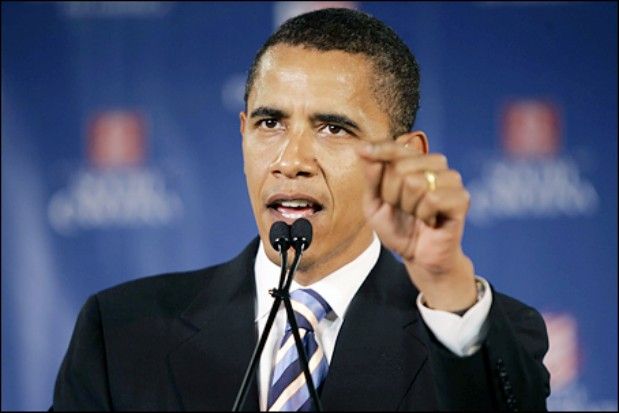
Prof. Ahmet Davutoglu, the chief foreign policy advisor of Prime Minister Tayyip Erdogan was in Washington on the eve of US President Barack Obama’s visit to Turkey, seeing top White House officials. At a press conference in Washington Davutoglu said that there has been differences of opinion between Ankara and the previous US administration, but with the new Obama team he has found out that foreign policy objectives of the two allies are now completely coinciding. Responding to arguments back in Turkey that Obama’s demands from the Turkish government during the Ankara talks might put Turkey in a difficult position, Davutoglu said, “Nobody can commission us, we are just playing our historical role.” Davutoglu met with James L. Jones, the National Security Advisor of President Obama, George Mitchell, the special US envoy to the Middle East and other officials. “During the term of the previous president Bush we had differences of opinion with the US. Syria was an example. Now with the Obama administration’s approach we see that Turkey’s policies are almost on parallel lines. Turkey’s foreign policy activities in the Middle East, Caucasus and Afghanistan are appreciated here,” said Davutoglu. He also pointed out that former US president Bill Clinton visited Turkey on the seventh year of his presidency and George Bush came to Istanbul during his fourth year in the office. “President Obama will pay his second bilateral visit to Turkey after his first to Canada. This shows the importance that US gives to Turkey. President Obama’s decision to visit Turkey is the sign of the beginning of a historical period in constructive cooperation in the relations of our two countries,” said Davutoglu. “Everybody now sees that Turkey’s strategic importance has increased greatly,” he added. Davutoglu said that work is underway on a scenario in the interests of […]

Obama’s visit raises opposing views among Turkish opinion makers

aNiyazi Dalyanci “President Barack Obama’s visit to Turkey underlines the importance the new US administration attributes to Turkey as a ‘pivotal’ nation in the region that might undertake more crucial functions beyond and above simply acting as a mediator,” wrote Cengiz Candar, veteran foreign affairs commentator of mainstream daily Radikal. “Why is he coming? Surely, he is coming not to give but to take,” with these words Onur Oymen, the vice-chairman of the main opposition Republican Peoples Party (CHP) expressed his interpretation of the presidential visit. As expected, the new US President Obama’s visit to Turkey, scheduled for the beginning of April, gave politicians and journalists the opportunity to express sometimes diametrically opposing feelings. However, both those who view the visit with some apprehension and those who claim that Obama’s choice of Ankara as the destination of his second trip outside America shows how Turkey’s strategic importance has increased in the eyes of the US administration, agree on the topics that would be discussed during the talks. “It is obvious what he would want. He is giving priority to Afghanistan. While he is shifting his forces from Iraq to this country, he is going to ask for combat units (to serve in Afghanistan) from Turkey. Another topic is the opening of the border with Armenia. He would demand the solution of the Cyprus problem in a satisfactory manner for the Greek Cypriots. Also the withdrawal of US troops from Iraq via Turkish territory will also be on the agenda. There is no chance for the government to say ‘No’ to any of these demands,” said Oymen. Oymen also claimed that Obama will use the Armenian genocide bill in the Congress as a lever to apply pressure on the Turkish government. Leading Turkish journalist Mehmet Ali Birand agrees on the possible […]

What is New About HABERTURK?

Asli Tunc First a television channel then an Internet site and now a daily newspaper with exactly the same name —HABERTURK — came into our lives on March 1. The insistence on this overused title for a new brand seemed to be puzzling for many people but despite the confusion, HABERTURK (HT) daily claimed to be different than the rest of the newspapers in the market. The advertising campaigns mainly focused on its unique format and printing quality. The owner, Ciner Group, was welcome as a competitor to Dogan Media Group since the latter obviously represented the concentration in the media market in Turkey. However, the choice for the editor-in-chief position should have been the first wake-up call for the ones who had high hopes for this new daily. Fatih Altaylı is quite a well known figure in the Turkish media circle. He has a reputation for his aggressive style of expressing himself and also he can easily be defined as a defender of machismo in addition to his sexist and militarist discourse in the Turkish media. To give you an idea, two recent incidents immediately come to my mind: On March 2002, on a panel he mentioned about a female human rights lawyer by saying “I should be damned if I do not sexually harrass her at the moment I see her.” His other comments were rather more unpalatable. Writing in his column at the HABERTURK website, Altayli, apparently furious about a female columnist, Gülay Göktürk’s observations about the Turkish military at a TV show, declared incongruously, “Miss, perhaps you are not aware but that army is protecting you between your legs too!” I suppose no more quotations are needed to illustrate the style of Altayli.. So let’s move on. With Fatih Altaylı in charge, HT came in big […]

High school drama group applies for EU funds

Tunc Karacay In 2010 Istanbul will become the Cultural Capital of Europe. Within this context, many organizations from Turkey applied with their projects, big and small, to get funds from the European Union. Among these, there is a group of high school students dedicated to theater. If they get support for their project from Brussels, they will launch a campaign to encourage their peers to go on stage. The initiative belongs to Sakip Sabanci Anadolu Lycee Theater Group (SSALTT). They need support for their plans to help promote theater activities in other high schools in Istanbul. SSALTT’s goal includes providing stage equipment, training students in dramaturgy, acting and directing. They are also planning to organize theater festivals where students from various Istanbul high schools will be able to stage their plays. Firstly, twenty High schools will be chosen and these schools will be provided with technical equipment such as sound and light systems. SSALT will also go to these schools with know-how about how to improve their stage set up and auditoriums. To realize this project SSALTT has applied to the European Union for 1.342.150 Turkish Liras (It is approximately 650.000 Euros.) Actually, the shortcomings of the Turkish middle education system have prompted the SSALTT to launch such a campaign, members of the group say. “Young people cannot find an opportunity to express themselves under the present education system in Turkey. So the stage provides them an opportunity to express themselves freely,” says Rifat Magriso, one of the directors of the group. According to the group, middle education in Turkey relies heavily on memorizing textbooks and does not allow students to develop their creative skills. In other words there is no room for imagination at classrooms. So the stage is a formidable means to fill in that gap. “High school […]

Pinar Kür talks about woman-to-woman television show with Hillary

Ariana Ferentinou The visit of Mrs. Hillary Clinton to Turkey about two weeks ago lasted less than 24 hours. Yet, it was the first by a high representative of the new Obama administration and generated enormous interest. Mrs. Clinton announced the visit to Turkey by president Obama in the beginning of April and flattered the Islamic-rooted Erdogan government for the importance of their country; yet she chose an anti-government, secularist popular all-woman TV show to appear before the Turkish public. The well known writer Pinar Kür, and one of the hostesses of the NTV show, “Haydi Gel Bizimle Ol” (Come and Join Us) reveals that the offer for Hillary Clinton to appear at their show came from the Americans, that Mrs. Clinton was not informed in advance about the questions put to her by the four women hostesses, and that she was quite comfortable when talking about her personal life. Kür believes that by choosing their program, the Obama leadership wanted to send a political message to the Erdogan government that they would not define Turkey as a “moderate Islamic country” any longer. Also Kür points out that Mrs. Clinton was a rival of Obama during the race for the Democratic presidential candidacy, but the fact that she is now serving as the US Secretary of State is a sign of “democratic culture”. “It does not happen with us,” she says. “Ecevit was the same. Demirel was the same, Baykal is the same. Of course, Erdogan is the same. Everyone who opposes them is thrown out.” The initial approach came from an official of the American Consulate in Istanbul, says Pinar Kür. “She approached Cigdem Anad, our moderator and asked whether we would like to interview Mrs. Clinton. I think, they wanted a women’s program and ours was both the […]

A nation that loves to hate

Asli Tunc The presenter on a popular Turkish TV was trying to hide her feelings while reporting the crash of the Turkish Airlines plane in Amsterdam a couple of weeks ago. Allegedly the Dutch emergency crew intentionally had not come to the rescue of the pilots and wounded passengers and kept them waiting for 45 minutes in the middle of the muddy fields near Schiphol Airport. How could they do such a thing? It must have been because we were Turks, wasn’t it? “Turks have no friends but themselves” is a popular saying that most of us believe in. But lately this general belief among the Turkish society became more and more visible in news reporting. The “us vs. them” dichotomy started to lead us to a rather concerning ethnocentric view of the world. We feel more isolated on the global arena, being paranoid at times blaiming the non-Turks for every single bad incident. This feeling might be explained both with the rising nationalist sentiment and also with frustration because Turks believe they have been treated unfairly in the EU accession process. As a bottom line, Turks do not feel sympathy to any nation. In fact this was double-checked and revealed in a BBC World Service-GlobeScan Poll last month. This global poll is taken in 21 countries annually to learn the public views of each country’s of others. The results indicated that Turkey was the only country where the public views were predominantly negative. According to the results, Turkish public opinion showed great distrust in the US, Canada, all the EU countries, India, Russia, Brasil, Japan, South Africa, and you name it. Well, did it come as a surprise to you? Probably not. Ethnocentrism is defined as the tendency to look at the world primarily from the perspective of one’s […]

Do you hanker for pork? Here’s the address

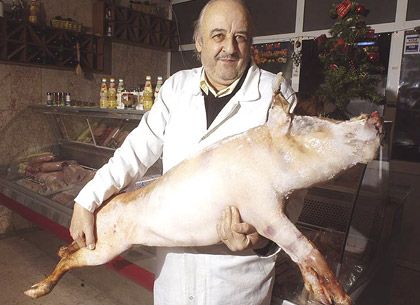
Good quality pork chops, bacon, sausages and other pork products are probably the most sought after delicatessen by the expats living in Istanbul. These are the products that are hard to come by in a Moslem country where consumption of pork is proscribed by religious rules. But still, there is a small and spotlessly clean shop not far from Istanbul Bilgi University’s Dolapdere campus where the customers are offered a wide variety of charcuterie products. Lazaros Kozmaoglu, 63, is the last pork butcher of Istanbul. He comes from a very old Greek family that has its roots in the central Anatolian town of Karaman. He says his family moved to Istanbul 200 years ago. “Actually I started this profession by accident. In 1967 I was a partner of a salami factory. The boss left the country after his business failed. I took it over,” explains Kozmaoglu. He opened the shop in Dolapdere in 1977 and for more than 30 years he has probably been the only pork product supplier in the city. “We are the only institution that has a license to sell pork,” he observes smilingly. “Some others sell pork without a proper license.” Kozmaoglu buys his pork from the pig farms in Mersin and Antalya and processes it himself. “When I started the business there were some 70 pig farms in Istanbul only and at least five or six shops selling pork. Now the amount has decreased. In the old days I had almost 45 different products in the shop. Now I only offer six, seven varieties,” he explains. Kozmaoglu also complains about the quality of mass produced processed meat like salami sold at supermarkets and other shops. “If you compare the price of meat with the prices put on these products you will get an idea of […]

Campaigning turns coarse as March 29 local elections near

“You got to power, but you failed to be a proper man,” snapped Deniz Baykal, the leader of the opposition Republican People’s Party (CHP) criticizing the language used by Prime Minister Recep Tayyip Erdogan during his election campaigning. “This maganda style does not suit a prime minister,” he added. The definition of the slang word, maganda, is given in Turkish dictionaries as “an ill-mannered, vulgar and uncouth man.” Erdogan retorted by opening a libel case against Baykal demanding 50,000 TL ($28,000) in damages. But the argument did not stop there. Baykal addressing his party group defended himself. “Let’s see the epithets the prime minister hurled at us so far. He used words like ‘scum,’ ‘politically immoral,’ ‘dishonest’ towards us? What is more appropriate than saying that this style does not fit a prime minister? Until now, the prime minister opened four libel cases against me. Every single one of them was rejected by the courts. We never went to court against him. If he wants to have respect he must learn how to show respect to others,” Baykal said. Local elections in Turkey scheduled for March 29, have already provided enough material to keep the courts busy, mostly coming from Erdogan’s lawyers. Baykal was not the only politician to become the object of litigation by Erdogan. In a flurry of libel cases, Devlet Bahceli, the leader of the rightwing Nationalist Action Party (MHP) and a number of journalists also took their share of court cases for “insulting” the prime minister. One petition by Erdogan’s lawyers alleged that Bahceli “violated the personality rights” of Erdogan in a written campaign statement by saying, “Prime Minister Erdogan has appeared before the Turkish nation with a low level and cheap strategy based on lies, slander, abuse and deception. By taking up the weapon of […]

TBMM’de dil sansürü

Demokratik Toplum Partisi (DTP) Eşbaşkanı Ahmet Türk, bugün Meclis’teki parti grup toplantısında 21 Şubat Anadili Günü nedeniyle, Türkçe giriş yaptığı konuşmasına Kürtçe devam etti. Canlı yayın yapan TRT 3’teki Meclis TV, konuşmanın Kürtçe bölümündeki ilk birkaç cümlenin ardından yayını kesti; ekrana çıkan spiker, “Anayasa ve Siyasi Partiler Kanunu gereğince Meclis kürsüsünde ve toplantılarında Türkçeden başka dilde konuşma yapılamayacağı hükmü doğrultusunda yayınımızı kesmek zorunda kaldık, seyircilerimizden özür diliyoruz” dedi. Ancak Anayasa’da spikerin söylediği doğrultuda bir madde yok. Meclis İç Tüzüğü’nde de konuşmaların hangi dilde yapılacağına dair belirleyici bir madde bulunmuyor. Sen misin Kürtçe konuşmak isteyen? Konuşmasına Türkçe olarak başlayan Türk, 21 Şubat’ın anadili günü olduğunu ve dil haklarının kısıtlandığını ifade etti. Türk “Anadili zenginliğinin korunması, yaşatılması çağın gereğidir. Dil masumdur, güzeldir, bütün diller kardeştir” dedi. Kürtçe’nin yasal düzenlemelerle güvence altına alınması gerektiğini belirten Türk, TRT Şeş’te Kürtçe yayın yapıldığını ancak bunun yasal güvencesinin olmadığını söyledi. Ahmet Türk konuşmasında, “Bizim Türkiye’de resmi dilin Türkçe olmasına herhangi bir itirazımız olamaz, ancak yerel yönetim gibi, eğitim alanı gibi, basın yayın alanı gibi, ya da yerel meclisler gibi alanlarda Kürtçe üzerindeki bütün yasakların kalkması ve Anayasal güvenceye bağlanması talebimizin de son derece gerçekçi bir insani talep olduğunun anlaşılmasını istiyoruz” dedi. Türkçe konuş çok konuş! Türk daha sonra, DTP milletvekillerinin, belediye başkanlarının Kürtçe konuştukları için cezalandırıldığını ancak Başbakan Kürtçe konuştuğu için kendisinde Kürtçe konuşmaya hak gördüğünü belirterek, “Bütün dillerin güzelliği ve kardeşliği inancından hareketle, konuşmamın bundan sonraki bölümünü Kürtçe yapmaya çalışacağım” dedi. Meclisteki DTP grubunda bulunanlanca ayak alkışlanan Ahmet Türk, Kütçe konuşmaya geçtikten sonra TRT’nin meclis televizyonu da yayını kesti. Ahmet Türk daha önce meclis kürsüsünde ya da grup toplantısında Kürtçe konuşmamıştı. DTP grubundan bazı milletvekilleri Meclis kürsüsünde Kürtçe kelimeler kullanıyorlardı ve bunlar da meclis tutanaklarına “bilinmeyen dil” olarak kaydediliyordu. Sansürcü TBMM Başkanı Toptan’mış TBMM Başkanı Köksal Toptan daha sonra yazılı bir açıklama yaparak, DTP Eşbaşkanı […]

Oral: Putting the world to rights with his pen

“I found as I grew up that there were things I did not like which were beyond my power to put right. I developed a dislike for governments. The only solution for me, I decided, was to draw”. So began the career of Tan Oral, one of Turkey’s most consistently popular cartoonists who this week received the Istanbul Journalists’ Association Award for his word. Although cartoonists in Turkey have faced restrictions, their work, by its nature is harder than writing for the authorities to pin down. “After the military coup on March 12 1971, two of my cartoons which appeared in a magazine “friends of the people” were indicted because they presented oppression. Those who conducted the investigation delivered the report saying because there was no writing it was impossible to establish a meaning and no legal proceedings were opened,” said Oral. After the subsequent coup in September 1980, Oral and his friends were conscious of the political atmosphere and were discreet in what they drew. “But I tried not to be disinterested or insensitive to the unpleasant things that were happening and not to compromise my own political views. I continued to draw with the idea that I was contributing to the democracy we hoped would return,” said Oral. “Humor is used for a reason. It has to be critical and must aim to change the world. Laughter comes from the pleasure of this undertaking. In the West comedy of the kind found in comics is just intended to make people laugh. Such publications are sold all around the world. There comics like this in Turkey, too. But cartoon magazines are published for defined reasons. Once such a magazine achieves its aim, it either changes its style, stops publication or is destroyed by the powers it wants to change. […]

Alluring Aphrodisias is a minefield of ancient Roman treasures

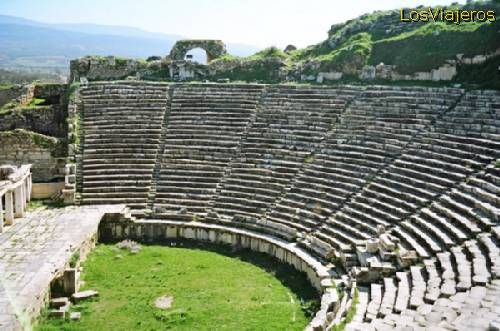
News,etc Some say that Aphrodisias, in inland Aegean Anatolia is the most enchanting site in Turkey and they may be right. Ephesus is too large and well organized to be as appealing and Troy, as charming and mythical a picture as it conjures up, has not been sufficiently unearthed. Aphrodisias falls between the two. It covers a surface area of 500 hectares within the fortification walls and contains one of Anatolia’s most awe inspiring stadiums -250 meters long and 140 meters wide with a 20,000 spectators capacity. With excavations still incomplete the site offers plenty of ruins for amateur archaeologists to reconstruct in their minds. Aphrodisias is not easy to reach, which is one reason why it has not attracted much attention from archaeologists or tourists until recently. On a plateau of 600 meters altitude, the site is 100 kilometers from the inland Aegean town of Aydin and 106 kilometers from Denizli, where Pamukkale is situated. Aphrodisias’ resurrection is an interesting story in itself; the village of Geyre named after the antique region of Caria was constructed within Aphrodisias fortification walls in the 18th century. By that time, the ancient site had long being covered by soil and forgotten, having suffered several earthquakes and raids. The inhabitants of Geyre grew crops on the ancient site built their houses with the pillars and stones that once supported Aphrodias temples and washed their clothes in conveniently shaped sarcophagi. In 1957, the villagers started digging an irrigation ditch and stumbled over more and more obstacles-things like sculptures and friezes- as they advanced. Finally, they decided to show the objects they had recovered to local museum curators. In 1959, the Turkish government moved the entire village off the site to a new location 1,5 kilometers away. It happened that the village, nestled upon a […]

Armenians in Turkey react to documentary

At least don’t force our children to watch that DVD, pleaded the Armenian citizens of Turkey in a letter with nearly 500 signatories to Prime Minister Tayyip Erdogan. They were complaining about a six-part documentary called, “Sari Gelin – Behind the scenes story of the Armenian question” that was sent to primary schools by the National Education Ministry to be shown to the students. “Sari Gelin” is, of course a folk tale shared for centuries by Armenians, Turks and other indigenous people of Anatolia. The folk song, Sari Gelin (Mountain Girl or Blond Girl) or Sari Gyalin in Armenian echoed in Istanbul streets when tens of thousands of people accompanied the coffin of Hrant Dink, the Armenian journalist slain under still obscure conditions, to his final resting place two years ago. Although the murderer of Dink, an 18-year-old lumpen kid from the Black Sea area, was captured, collusion of Turkey’s security authorities in the killing is being publicly debated today. Producers of the documentary probably gave this title to their work to create the impression that it was an attempt to erase animosities between Armenians and Turks. But the effect was the opposite. “Considering the way how the documentary in question deals with the issue, it is certain that it will fan the feelings of hatred and hostility through expressions of violence and discrimination rather than providing knowledge in historical subjects and thus increase the already existing animosities against the Armenians in the society,” the letter said. Since June 2008, the DVDs of the documentary were being distributed to the schools by the Education Ministry, including the Armenian minority schools. In January, the ministry asked the school administrations to report by February 27 how the documentary was received by the students. In the same circular letter the ministry revealed that […]

No museum entrance fee discount for exchange students

Pinar Keles Turkey sometimes appears as a country of contradictions that the students coming from four corners of the world to Turkish universities find hard to grasp.A recent example was brought to light by Istanbul Bilgi University’s History Department and Erasmus Club. Last year Bilgi’s History Department together with the Erasmus Students Club organized a tour of museums and historical sites in Istanbul for the exchange students to have a taste of the rich history of this land. Turkish students were also participating in the expedition. But when the group arrived at the entrance of the first museum, they were faced with a rule that discriminated foreign students from their Turkish friends. Turkish students were allowed to enter showing their student passes issued for museums for 10 TL that gave them access to all museums and historical sites. But foreign students, according to the rule put into practice by the Ministry of Culture and Tourism last year, were to pay 20 TL for each single visit. The rector’s office wrote to the Istanbul office of the ministry to find a remedy for this situation which obviously was neither in the interest of Turkey’s efforts to promote her historical riches nor a hospitable attitude towards foreign students who have chosen Turkey under the student exchange program. The reply was negative. It said, according to Article 5 of the rules! only Turkish citizens are entitled to purchase museum cards. It is understood that the Culture and Tourism Ministry does not observe one of the main universal rules of student exchange under international agreements. According to this rule “Exchange students who continue their studies in countries that are party to this convention are entitled to enjoy all the advantages granted to the students of that country.” Since students coming to Turkey under the […]

Gülen cemaatinin ilk ve en saf halkası

Kerameti kendinden menkul Abant Toplantıları’nın 18.’si bu yıl Kürtlerin denetimindeki Kuzey Irak’ın Erbil kentinde yapıldı. “Barışı ve Geleceği Birlikte Aramak” başlığıyla 2 gün süren toplantılara yine bir çok gediklisi katıldı. Oturumlar boyunca “Karşılıklı Bağımlılık”, “Medyanın İlişkilerde Rolü” ve “Ortadoğu’daki Sorunların Çözüm Yolları” gibi başlıklar ele alındı. Toplantılar sonunda okunan “Abant Platformu Sonuç Değerlendirmesi”nde karşılıklı ilişkilerin geliştirilmesi ve başlayan diyalog sürecinin devam ettirilmesi ve genişlemesinin gerekliliği; ilişkilerin gelişmesinin hem taraflara hem de bölgeye de barış ve istikrar getireceği vurgulandı. Fetullah Gülen grubuna bağlı Gazeteciler ve Yazarlar Vakfı tarafından yıllardır organize edilen toplantılara ve benzer etkinliklere bugüne dek cemaatin fikirleriyle uzaktan yakından ilgisi bulunmayan çok sayıda isim katıldı ya da katılıyor. Aylık Exspres dergisinin 2009 Ocak sayısında Abant Toplantıları ile ilgili, gazeteci Ayşe Çavdar’ın ve derginin 2008 Kasım sayısında da, cemaatin ilk yayın organı olan Sızıntı dergisinin 30. yılı nedeniyle feminist hareketin ileri gelenlerinden Handan Koç’un yazdığı yazılara sizler için yer verdik. Handan Koç Altın nesil, altın nesil Gülen senin bahtın nesil (Sızıntı dergisinden bir şiir) Sızıntı adı sizde ne çağrıştırıyor? 30 yıldır her ay yayınlanan bu dergiyi hiç baştan sona okuduğunuz oldu mu? Bence okuyun. Fethullah Gülen fikriyatını ciddiye alan herkes Sızıntı’yı da önemsemeli. Bu dergiyi herkes Zaman gazetesi eşliğinde bir apartman eşiğinde illâ ki görmüştür. 1980 sonrası yıllarda üniversitede okuyanlar Sızıntı’nın pek çok okulun koridorlarında bol bol dağıtıldığını hatırlıyorlar. Ben 1980 öncesinde bir üniversite talebesi olarak hiç karşılaşmadığım bu dergiyi, ilk olarak 12 Eylül sonrasında Mamak Cezaevinde paralanan ağzımı tedaviye gittiğim bir dişçinin bekleme salonunda gördüğümü ve bir tür parapsikoloji dergisi sandığımı çok iyi hatırlıyorum. Sızıntı’nın bir yeni Nurcu tarikatın yayın organı olduğunu birkaç yıl sonra öğrenmiştim. Bu yeni tarikata, Fethullah Gülen’in ismiyle anılan bu organizasyona ne isim verilmesi gerektiği, nasıl tanımlanacağı sosyolojik bir soru. Gülen organizasyonu, dinî-malî-politik bir organizasyon olarak ve öğretileri itibariyle en çok ABD’de benzerleri bulunan bir […]

Can you have a bellyful for 5 TL?

Yahya Ozgur Tavlan In the hustle and bustle of daily life in Istanbul, students, office workers and many other inhabitants find themselves in search of inexpensive but healthy food as they run from one place to the other doing their daily chores. Eating outside is almost always either hurts your wallet or it is not good for your health. Fast food joints that are abundantly lining Istanbul streets are not recommendable judging from the profusion of warnings coming at us from healthy living literature. But if you know your way in this city, you can safely subdue your hunger for even as little as 5 TL. We tried several tuck shops to give you an idea and serve as a guide for those who feel peckish as they go about their daily tasks on the Istanbul streets. Umut Büfe (Kucuk Bayram Sokak. No.8 Beyoglu) Mustafa Teker, the owner, says they have recently opened and their clientele consists of people working in the neighborhood. “Our objective is to attract as many customers as possible. We are buying the foodstuff at discount prices and we cook ourselves, so we don’t have personnel expenses. This makes us offer lower prices than other restaurants in the area,” says Teker. At Umut Bufe a morning breakfast consisting of, white cheese, kasseri, butter, honey, olives, egg and Turkish pastry costs 3 to 4 TL. While you can have lunch or dinner for 4 to 5 T.L. Damak Tadi Meat Restaurant (Beyoglu) Zeki Kadri Zenginal who operates Damak Tadi restaurant says he belongs to a group of relatives running five restaurants in Beyoglu. “We all buy our stuff collectively. This gives us cost advantages,” he says. “I am working 16 hours a day. They are asking me why your prices are so low. We buy a kilo […]

Muhafazakâr kuşatmaya liberal destek

Kerameti kendinden menkul Abant Toplantıları’nın 18.’si bu yıl Kürtlerin denetimindeki Kuzey Irak’ın Erbil kentinde yapıldı. “Barışı ve Geleceği Birlikte Aramak” başlığıyla 2 gün süren toplantılara yine bir çok gediklisi katıldı. Oturumlar boyunca “Karşılıklı Bağımlılık”, “Medyanın İlişkilerde Rolü” ve “Ortadoğu’daki Sorunların Çözüm Yolları” gibi başlıklar ele alındı. Toplantılar sonunda okunan “Abant Platformu Sonuç Değerlendirmesi”nde karşılıklı ilişkilerin geliştirilmesi ve başlayan diyalog sürecinin devam ettirilmesi ve genişlemesinin gerekliliği; ilişkilerin gelişmesinin hem taraflara hem de bölgeye de barış ve istikrar getireceği vurgulandı. Fetullah Gülen grubuna bağlı Gazeteciler ve Yazarlar Vakfı tarafından yıllardır organize edilen toplantılara ve benzer etkinliklere bugüne dek cemaatin fikirleriyle uzaktan yakından ilgisi bulunmayan çok sayıda isim katıldı ya da katılıyor. AylıkExspress dergisinin 2009 Ocak sayısında Abant Toplantıları ile ilgili gazeteci Ayşe Çavdar’ın ve derginin 2008 Kasım sayısında da, cemaatin ilk yayın organı olanSızıntı dergisinin 30. yılı nedeniyle feminist hareketin ileri gelenlerinden Handan Koç’un yazılarına sizler için yer verdik. Ayşe Çavdar “Türkiye’de liberalizm bir Faust öyküsü oldu.” Sosyal antropolog Aykan Erdemir’in Goethe’nin ünlü “ruh satma” eserini hatırlayıp hatırlatması boşuna değil. “Türkiye’de Farklı Olmak –Din ve Muhafazakârlık Ekseninde Ötekileştirilenler” başlıklı araştırma küçük bir kıyamet kopardı. Araştırma, Türkiye’de AKP’nin iktidarında muhafazakârlığın hangi kanallarda derinleştiğine dikkat çekiyor, muhafazakârların düşüncelerini ve hayat tarzlarını paylaşmayanlara karşı baskıcı ve ayrımcı davrandıklarını ortaya koyuyordu. Bugüne kadar dindarların, örneğin başörtülü kesimlerin uğradığı ayrımcılıkları dile getiren araştırmalarıyla defalarca gündeme gelen Binnaz Toprak, hiç alışık olmadığı üzere muhafazakâr ve liberal kalemler tarafından topa tutuldu. Örneğin Şahin Alpay, HaberTürk’te Binnaz Toprak’ı bilimsel metodolojiden uzak bir araştırma yapmakla eleştirdi. Ayşe Buğra’nın verdiği metodoloji dersinin ardından üzerine bir ağırlık çökse de, iddiasını Zaman’daki yazısında tekrarlamayı tercih etti. Emre Aköz, Sabah’taki köşesinde Toprak’ı “bilim kisvesi altında gazetecilik” yapmakla eleştirdi. Hatta, Perihan Mağden, Ayşe Arman’la Binnaz Toprak’ı aynı kefeye koydu Radikal’de. Gökhan Özgün, Taraf’taki köşesinden Toprak’ı “cemaat düşmanı”, dahası “özel harpçi” olmakla suçladı. “Dolaylı iktidar sorumluğu” Muhafazakârların […]

Da Vinci’s Bridge to rise over Golden Horn

Hilal Özdemir “I your faithful servant, understand that it has been your intention to erect a bridge from Galata to Stambul…” With these words Leonardo Da Vinci described in a letter to Sultan Bayezid II in 1502 how he would build the greatest single span bridge of the ancient world. Although some sources say that the letter found in the Topkapi Palace archives in 1952 was not in Da Vinci’s handwriting, a leather bound notebook belonging to him at Institute De France in Paris contains two different drawings, one of which is a bird’s-eye view, are explained in detail in Leonardo’s own hand: The bridge, which stretches from Pera to Constantinople, is 40 braccia (1 meter = 1.64 braccia) wide, 70 braccia high above the water, and 600 braccia long, in other words, 400 braccia over the water and 200 over land, and thus has its own abutments. When converted to modern measurements we see that Da Vinci’s description fits the Golden Horn which has an average width of 244 meters and 400 braccia over water is exactly 244 meters. The entire length would have been 600 braccia that corresponds to 365 meters. In the letter Da Vinci tells the Sultan that galleons with full sails would be able to pass under the bridge. Because, he says, the bridge will be standing 70 braccia above the water. That is 45 meters which would allow passage to the biggest vessels of the time. Probably because Sultan Bayezid II was not convinced that the project was feasible, the idea was dropped; until it was taken up by Norwegian artist Vebjorn Sand in 2000. Vebjorn built a replica of Da Vinci’s Golden Horn Bridge, but one fourth in size, as an overpass over the motorway connecting Oslo to the nearby town of Aas. […]

3 million candidates for 500,000 public slots

About 3 million candidates will enter the race at the local elections scheduled for March 29 in Turkey for the post of mayor in 2,123 municipalities, village headsman (muhtar) in some 36,000 villages and membership in the municipal and local councils. Out of the 3 million candidates some 500,000 will win the race. Local elections in many countries do not usually come with the fanfare that general elections exhibit; but not so in Turkey. Since fall last year political parties launched their campaigns full steam and the bickering between them is expected to get increasingly loud as March 29 approaches. Candidates from 20 political parties as well as independents will be running for the much coveted seats. But the real race will be run between the governing Justice and Development Party (AKP) of Prime Minister Tayyip Erdogan, main oppostion Republican Peoples Party (CHP) of Deniz Baykal, Nationalist Action Party (MHP) of Devlet Bahceli, Democratic Left Party (DSP) of Zeki Sezer and Democratic Society Party (DTP) which polls the votes of Turkey’s Kurdish citizens, especially in the southeastern provinces. In the previous local elections in 2004 AKP mayors won in 12 major Turkish cities including, Ankara, Istanbul and Adana. In other 46 cities out of 81, AKP candidates came on top as mayors. On March 29, the race seems to be close in cities like Izmir, presently run by a CHP mayor, Diyarbakir which went to DTP and Kocaeli, also under a CHP administration. Long before the election campaign was launched Tayyip Erdogan is known to give instructions to his party organization that he “wants” Izmir and Diyarbakir to be won over this time. CHP has introduced Kemal Kilicdaroglu as a candidate for Istanbul mayor. Kilicdaroglu, currently a parliament member, won popularity in recent months by revealing corruption cases against the […]